
Motion Forword - Words of a Therapist: Swinging*, Doing & NZ Travelling
(*not that kind of swinging!)
Welcome to Motion Forword - Words of a Therapist! Number 31!

Motion Forword is about discussing the combined benefits of movement with a positive mental attitude. Using my personal/professional experiences, evidence-based research and some of your own experiences.
Bringing some hope, positivity, happiness and maybe usefulness to those, perhaps like yourself, that needs a pick me up.
Something about me… UK Westie Bootcamp
It’s no secret that I have come to really enjoy this thing called dancing.
Salsa has been the main passion of mine for over 2 and a half years. But also, in the last year, I have discovered West Coast Swing (WCS). A dance that is playful, creative and dynamic.
I have been threatening to do a Salsa weekender for quite some time, but… I found myself in Windsor at the beautiful Beaumont Estate Hotel during the middle of February for a full weekend of WCS workshops and social dancing.
Safe to say I really enjoyed it (otherwise I wouldn’t be writing about it!) and even got to met PJ Turner. PJ Turner inspired me to take up WCS in the first place when I first saw this video of him dancing with Tashina Beckmann performing an improvised Jack & Jill dance (random partner with a random song) 9 years ago!
So I felt so privileged to see him in the flesh and be taught by him! Learnt so many useful tips from him and even got to dance with him when he wanted to demo something (wish someone caught that on camera!)
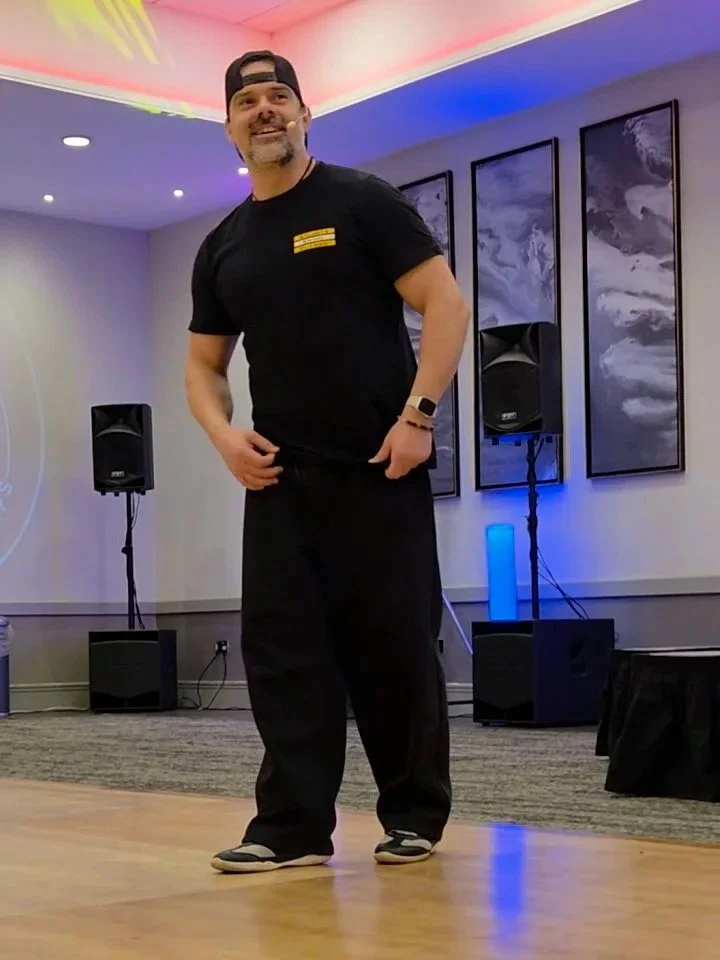
PJ Turner - aka Backwards Cap Dancer
I enjoyed it so much that I decided to sign up to ANOTHER WCS weekender which has competitions… so watch this space. 😅😅
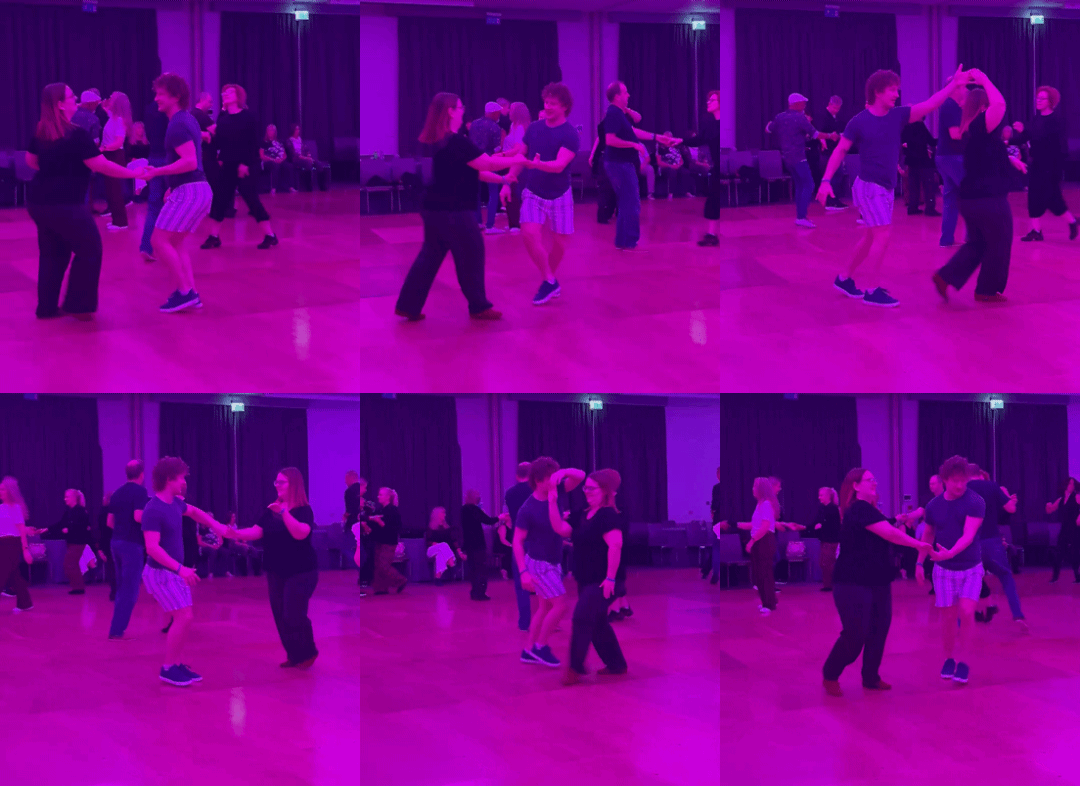
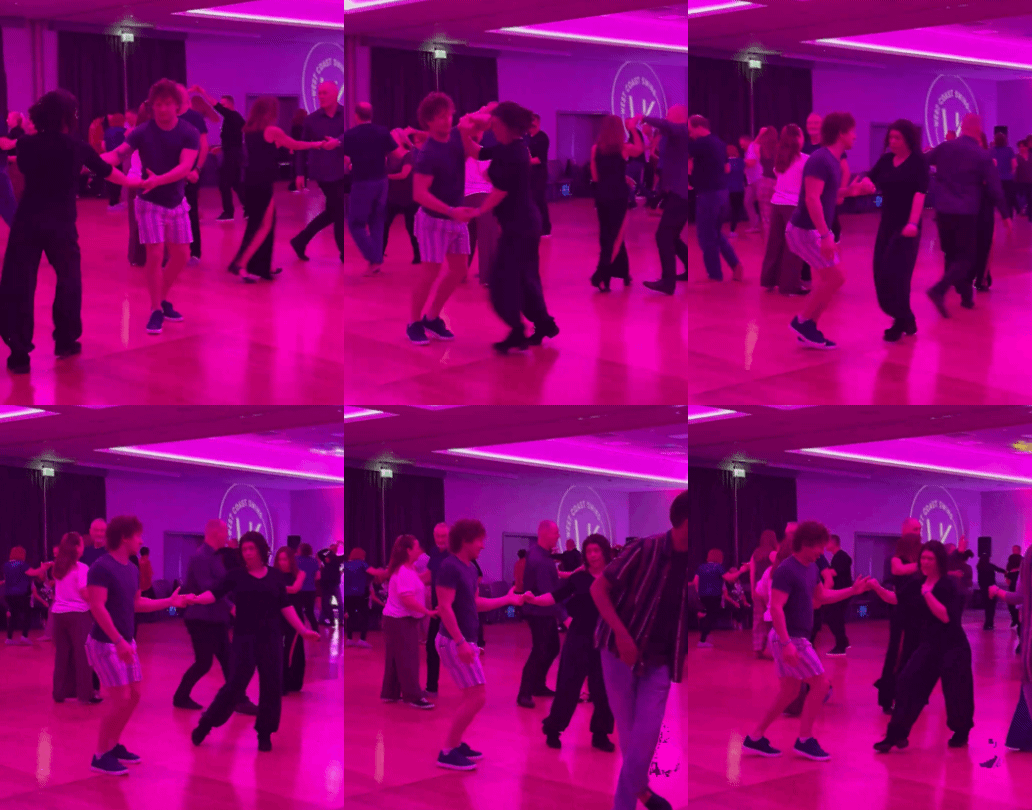
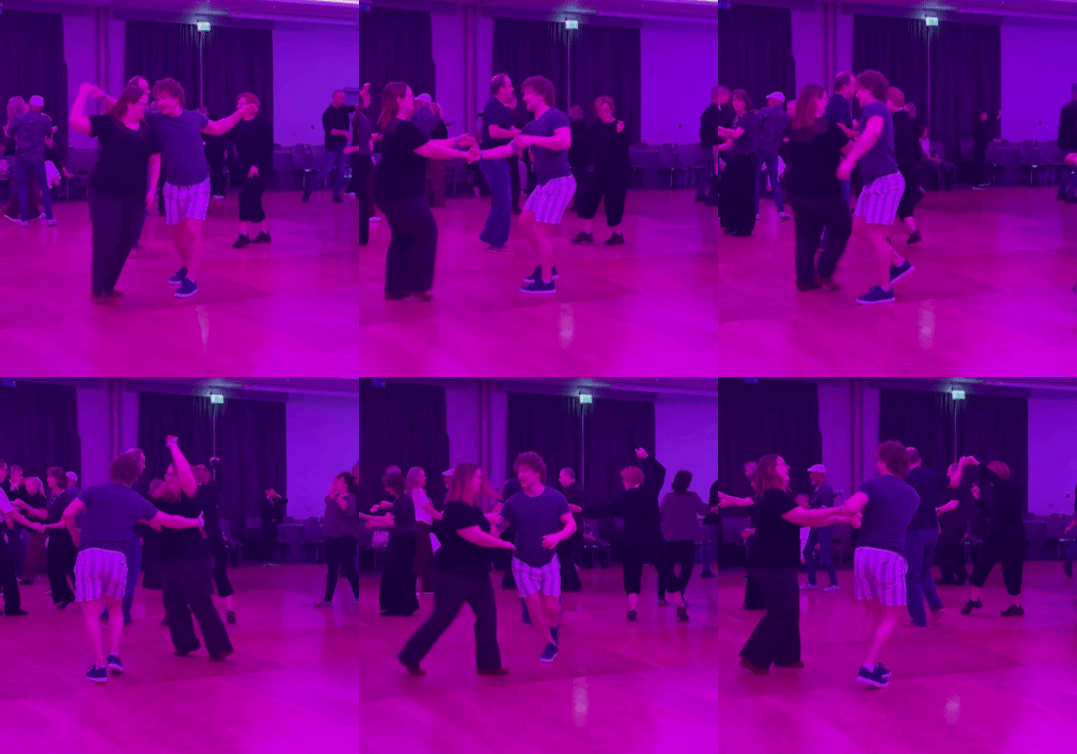
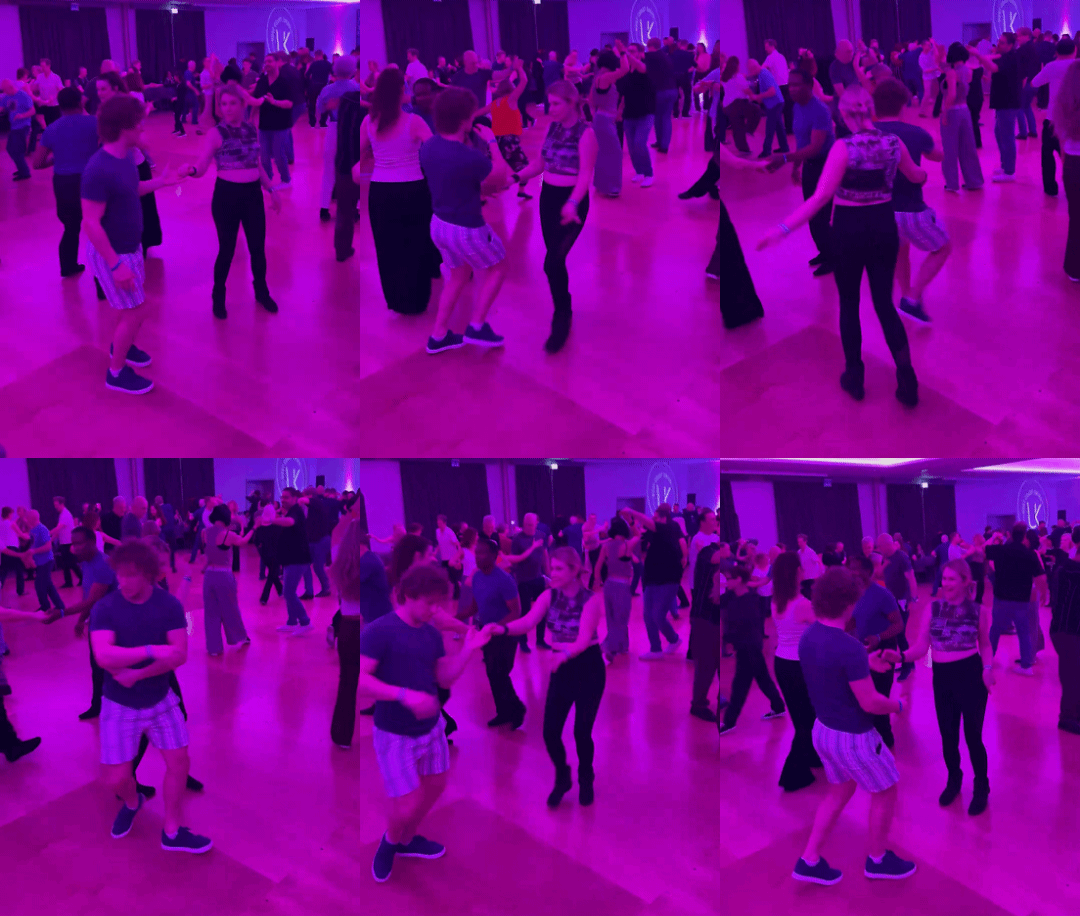
As always I like to show you a little bit of what me ‘doing stuff’ looks like so here are a few snippets of me dancing socially. No choreography, no pre-planning, just two people vibing to the music and me leading what I could remember from all the workshops.
(I may be the only person ever to dance in shorts!)
Enjoy!
Something for you… Do or Do Not? Preferably DO!
As you are reading this… are you sitting down?
Chances are… you are.
Heck, I am sitting down as I am writing this.
As a society, we have got pretty good at sitting down. But at what cost?
A recent patient told me (if you are reading this, you know who you are!) they spend 20hrs driving per week and 40hrs per week sitting at a desk over a 7 day working week. They walk their dog 1-2 times week for 20mins. They confessed that although they have access to bikes, a gym membership (their daughter nicked) and a home gym… they didn’t use it much.
They asked me one day when their problem had improved but had come back:
‘What have I done to cause this?’
My simple, yet Yoda-esk, reply was:
‘It may not be what you do, but what you do not’.

Make it stand out
Having some fun with memes…
My suspicions were that their sedentary lifestyle was creating a problem.
This meta-analysis of 27 studies looked at the relationship between sedentary behaviour (work and leisure time) and lower back pain. In both adults and children they found a correlation between them suggesting that we should develop preventative strategies to prevent people from sitting on their a**es all the time that could lead to problems later on!
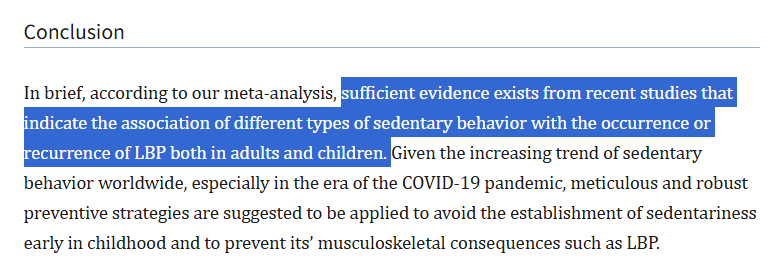
The conclusion from this paper: Mahdavi et al. 2021. Association between sedentary behavior and low back pain; A systematic review and meta-analysis.
This is ultimately the strategy I take with my patients that need some injection of activity into their lives. Our bodies need stimulation to stay healthy and grow, and from my 30th Issue of my newsletter, there is now a growing body of evidence that shows that muscles themselves release hormones/chemical messengers that do a bunch of positive/ productive things in our body.
So movement literally is medicine: it behaves like an anti-depressant, an anti-inflammatory, an analegesic (pain-killer), an immune system regulator, a bone/joint protector… the list goes on!
The advice?
Get moving more.
You will soon start to realise that it is not what you do that causes problems, but what you don’t do.
A story… New Zealand Bound
Ever worried about how back pain would impact your holiday?
That is exactly what happened to Maggie…
Maggie had been struggling with a mid/lower back issue since July/August 2025. She had been seeing her previous therapist but he had moved quite a way away and wasn’t finding improvement so figured she try someone more local.
It was the end of November that Maggie decided to come and see me. Her back had been stopping her from walking any more than 30 minutes but her main worry was being able to make the trip to see her son in New Zealand and enjoy the time whilst there.
I was positive, optimistic and felt that we had enough time to get things better in the time frame.
Straight off the bat, I felt Maggie would benefit immediately from some gentle movement exercises that focused on hip and lower back movement emphasising the importance of working within her tolerance to start with.
Maggie was brilliant and diligent. She applied the exercises and immediately started feeling improvements. Certain exercises worked better than others and over a few weeks we found a combination that worked well for her whilst limiting anything that didn’t (e.g. rotational movements were difficult).
We also touched on the multifactorial nature of pain. How pain is more than the physical. She had recalled looking after family members and bereavement around the time of the onset of her pains.
I hypothesised that this could have contributed to the resurgence of her pains. We can never be certain with direct correlation, but the research consistently suggests that pain is complex and influenced by lots of factors.

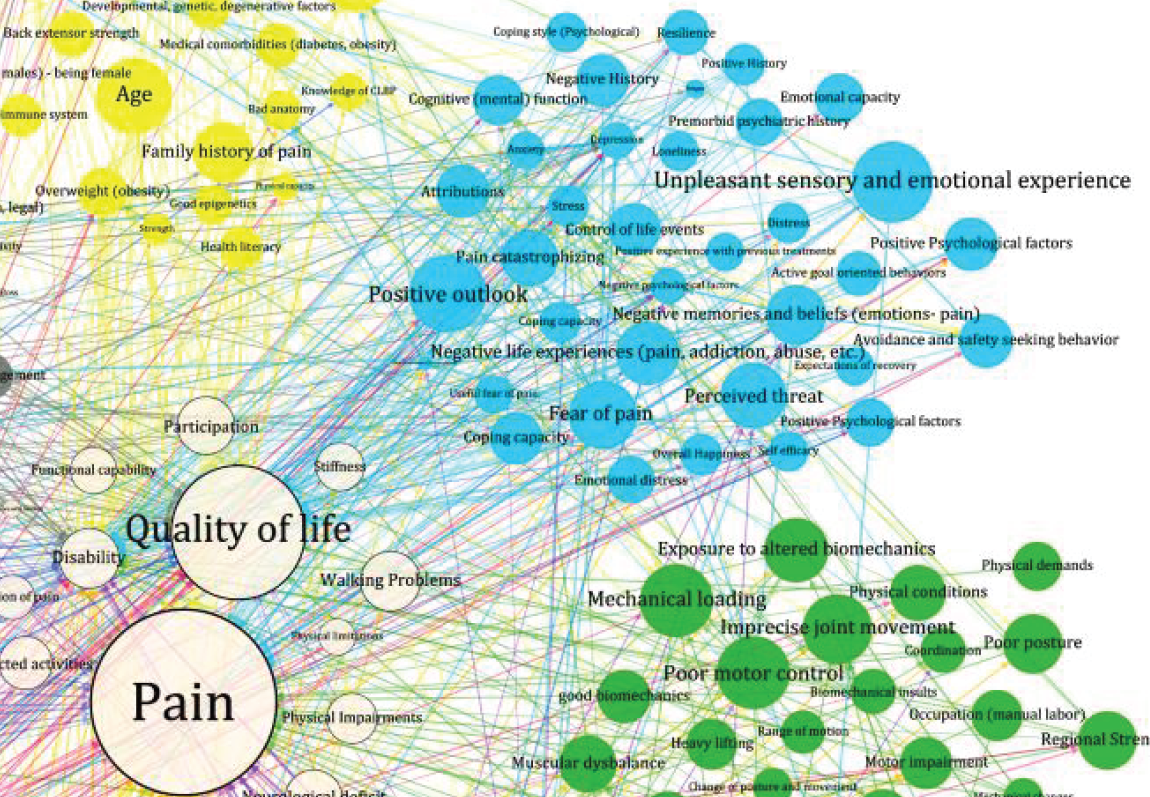
The Blue dots represent the psychological factors that can influence pain.
If you have a look at the theorised psychological factors (light blue) that could influence pain: perceived threat, fear of pain, coping capacity, stress, anxiety, unpleasant sensory and emotional experience to name a few…
It makes sense that these things could make pain worse from a physiological stand point. Making any metaphorical mountain that much harder to climb.
So… with the support, guidance and reassurance in place with a good adaptive rehabiltiation programme, that Maggie stuck to, we were able to get her from being anxiously unable to unbeatably capable. Now I hope she is enjoying New Zealand even as I write this!
Thank you Maggie for trusting in me and can’t wait to hear how your trip went!
Mabel was diligent!
Thanks for reading.
Until next month…
Motion Forword ⏩⏩
Nathan