
Motion Forword - Words of a Therapist: Running Season, Result Not Reason and Hip Treason
Welcome to Motion Forword - Words of a Therapist! Number 32!

Motion Forword is about discussing the combined benefits of movement with a positive mental attitude. Using my personal/professional experiences, evidence-based research and some of your own experiences.
Bringing some hope, positivity, happiness and maybe usefulness to those, perhaps like yourself, that needs a pick me up.
Something about me… Eastleigh 10km
On a beautiful Sunday morning on the 22nd March, we went and did the Eastleigh 10km run. Originally my role was to support my partner from the side lines, but as fate* would have it, I got to run the whole thing with her.
*Well not really fate, 3 people we knew pulled out rather last minute and I managed to grab one of their tickets!
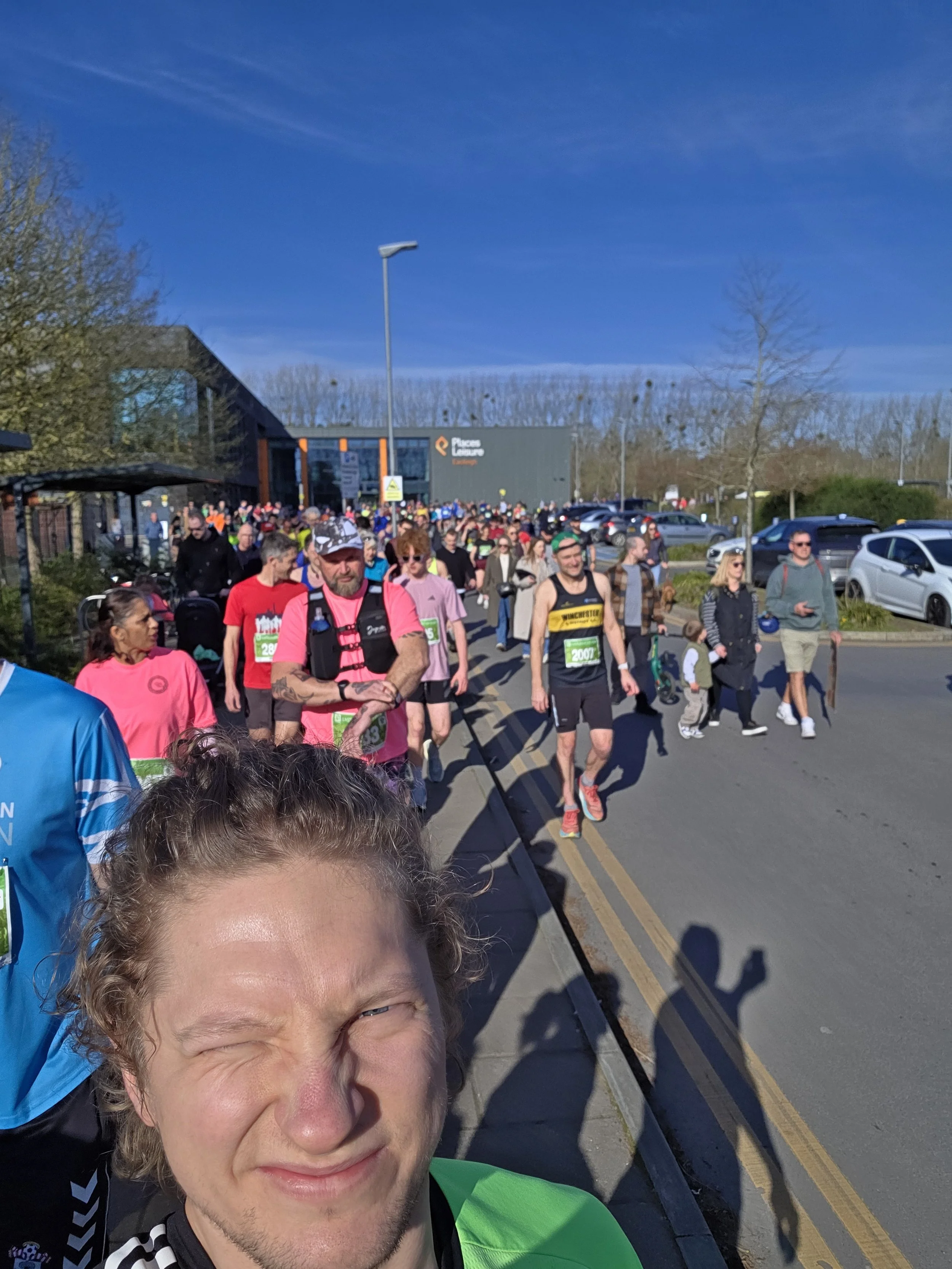
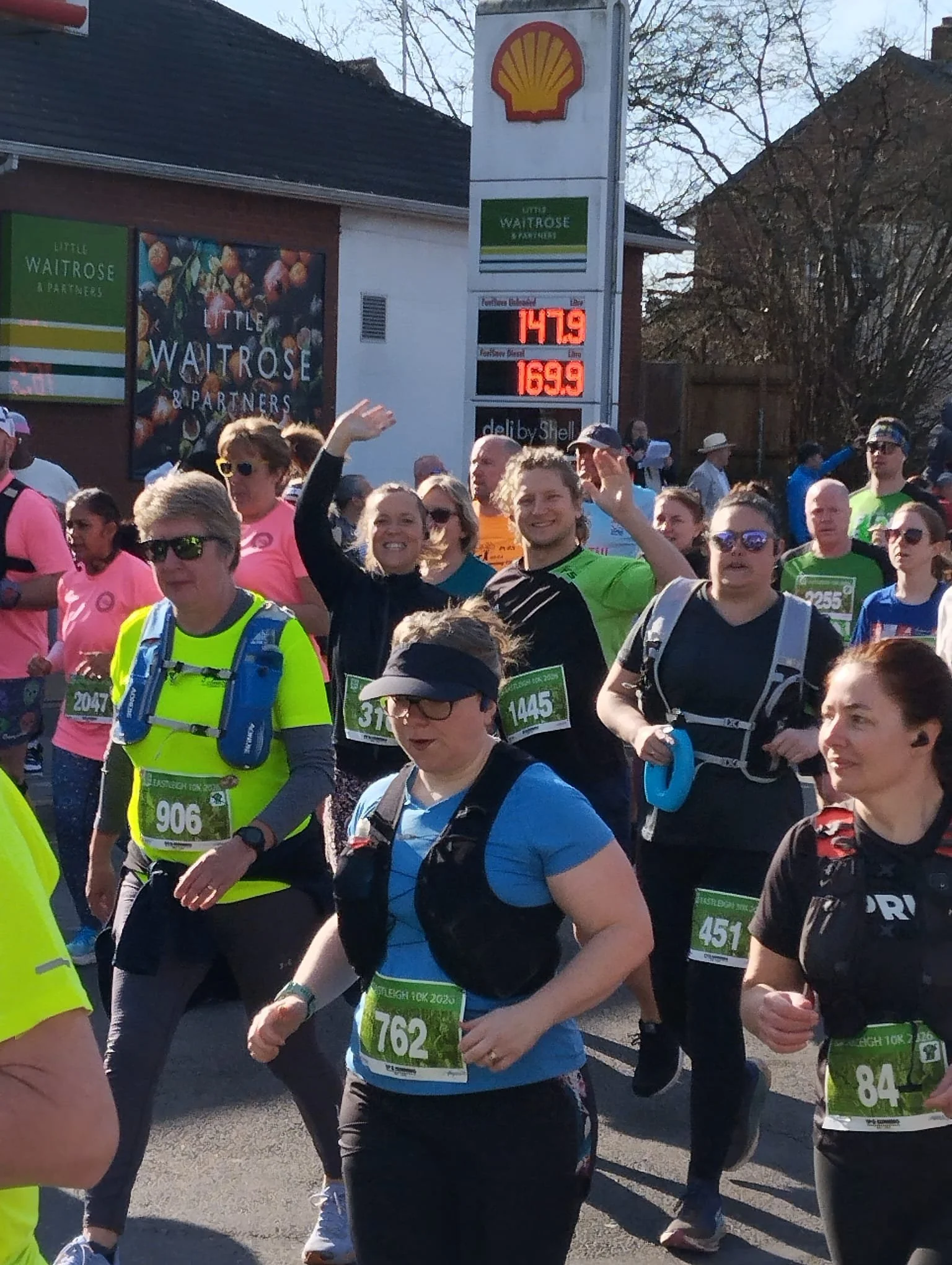
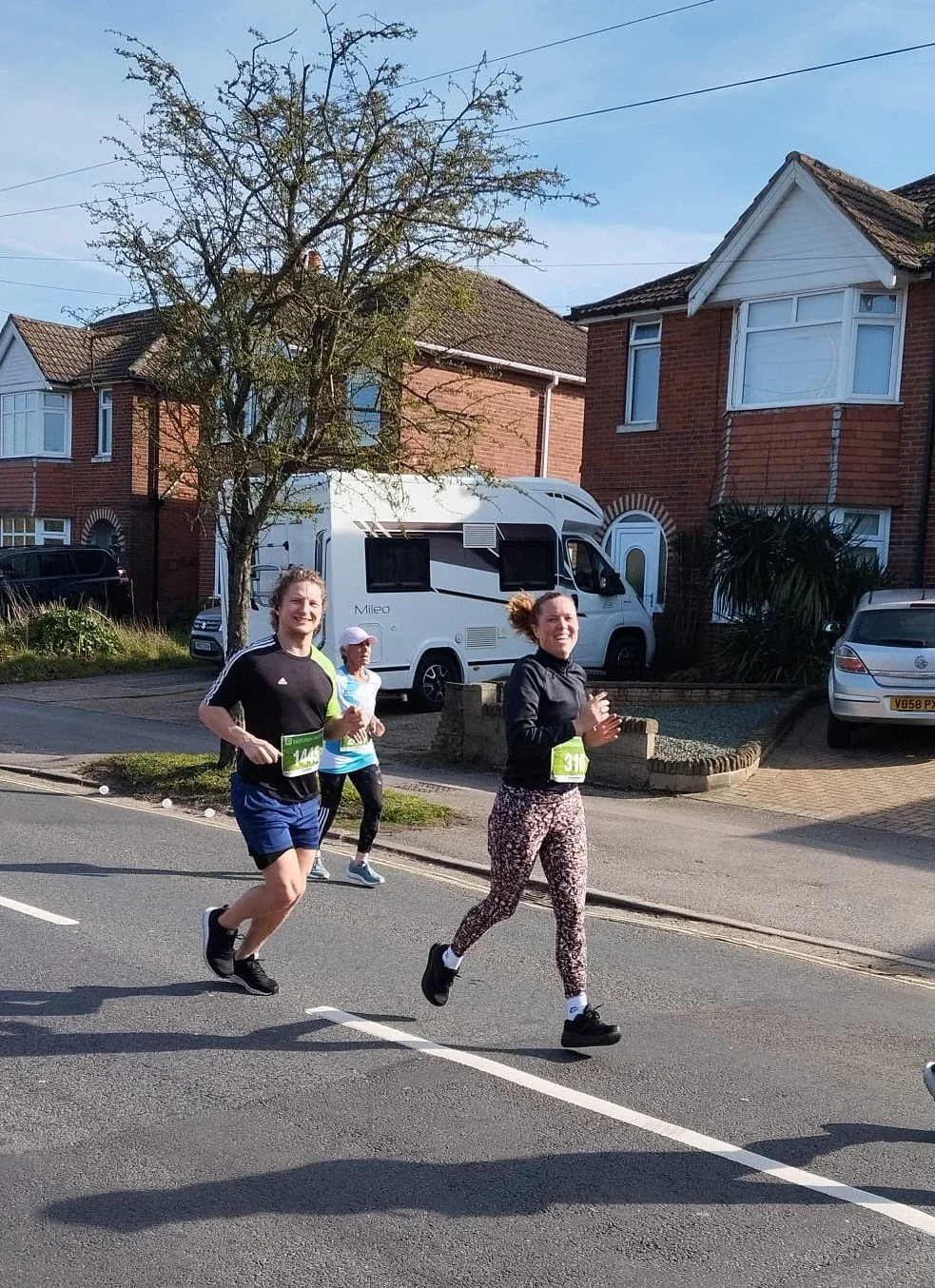
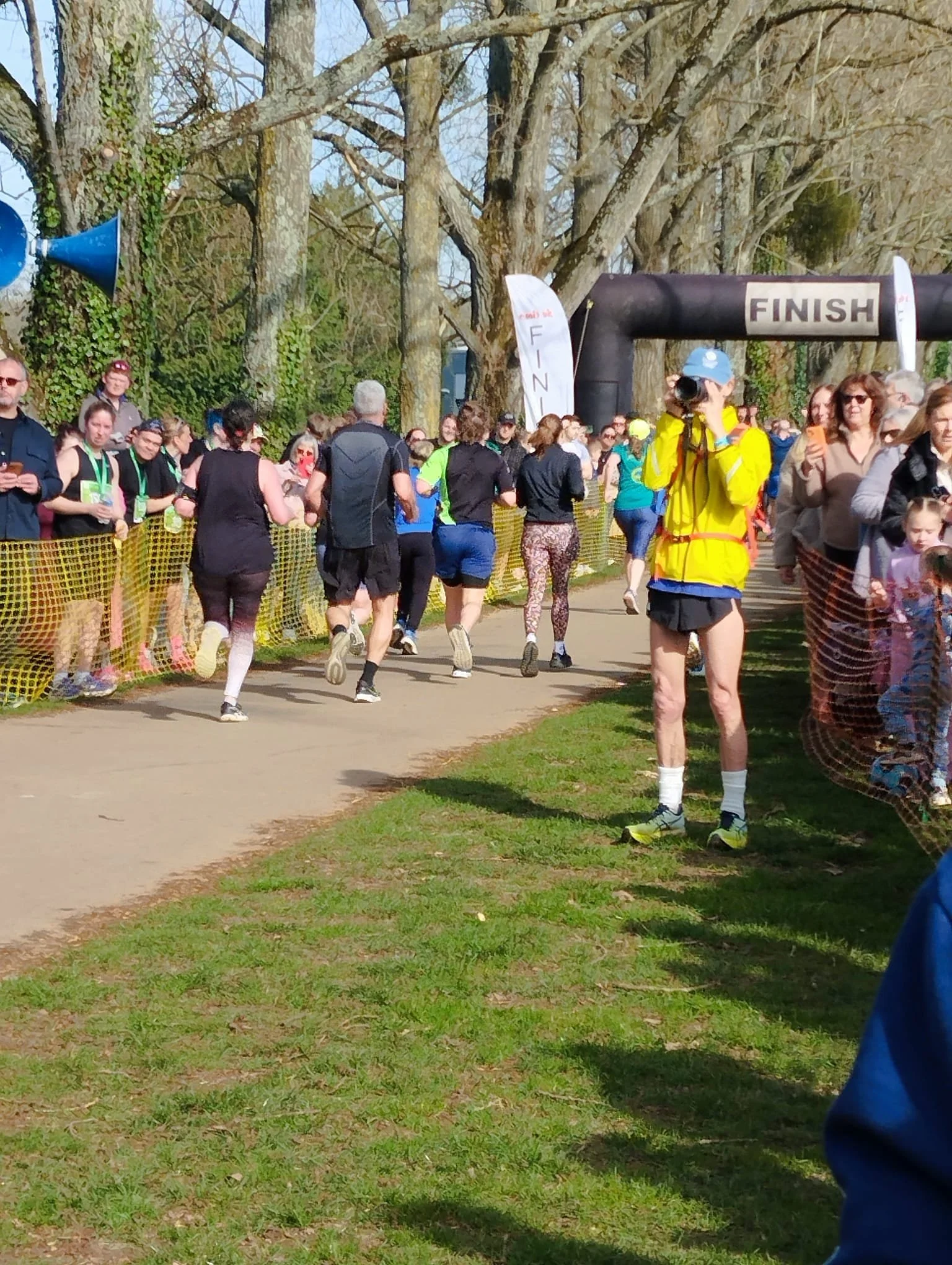
So armed with 5hrs sleep after dancing until 1am the night before, a couple of weeks prep and a banana for breakfast we set off on our first 10km run together!
I quite enjoyed soaking up the atmosphere and the Eastleigh locals cheering us all on. Felt very wholesome.
My partner was threatening to start walking around the 7km mark but I wouldn’t have it, encouraging her to see it through and stuck with her the whole way.
We completed the 10km in 1hr04 which is very respectable considering how unwell she has been feeling the last 5 weeks with a stubborn case of bacteria bronchitis.
Congratulations to everyone that completed the Eastleigh 10km including a few of my patients! Wooo!
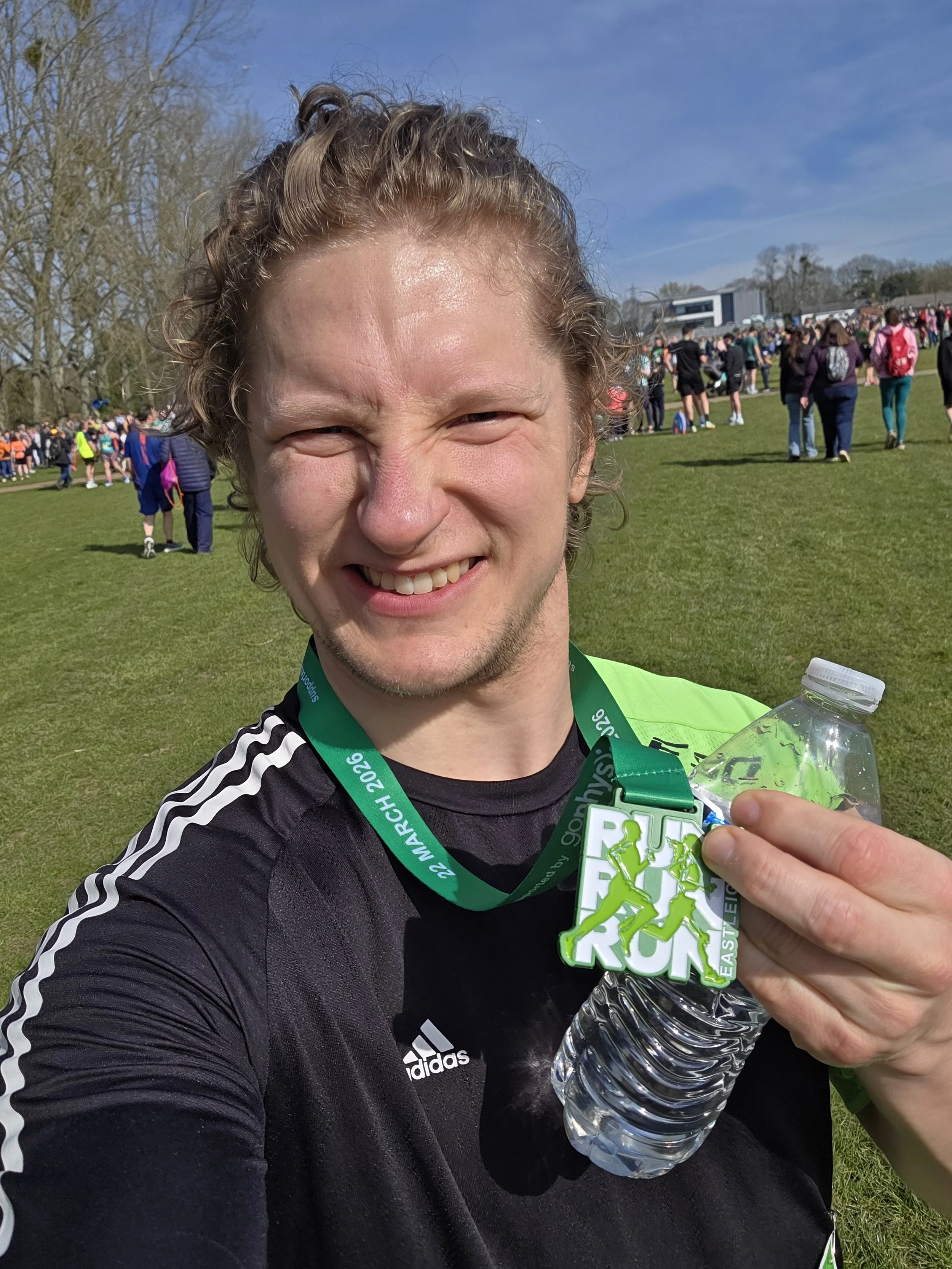
Obligatory Medal Photo!
Something for you… The Consequence is NOT necessarily the Cause
Did you have to read that a couple of times too?!
This sentence took me a little while to get my head around…
‘The consequence is not necessarily the cause.’
In other words, the result isn’t always the reason it started.
It was a sentence I came across in this paper that discusses the relationship of postural, structural and/or biomechanical (PSB) factors in lower back pain.
Examples of PSB factors include pelvic tilt variations, spinal curvatures, leg length discrepency, muscle weakness/’imbalance’, shoulder height etc
This paper outlines the various studies that have found no strong association between these PSB factors and developing lower back pain.
So in the context of pain, these are things we ourselves or others tend to notice and then report to our therapist thinking this is the cause of our trouble.
And as physical therapists, we have been trained to recognise these and fix it.
But as it turns out, according to this paper and many others, the things we see are a consequence of the pain… OR not related at all!
And this isn’t new information. This paper was published in April 2011 and references studies conducted back in the 90s.
Unfortunately, old habits die hard and new theories around what is the cause of pain and how it behaves are difficult to grasp for therapists and the general public alike. Some therapists/practices still push a very strong outdated PSB model which doesn’t stack up as I talk about here in Blind Spots.
But that is not the focus of this bit.
My main take away for everyone, is that if after you suffer an injury or a pain flare up and you notice your shoulder is slanting, your back is wavey, your back or leg muscles feel weak, you have a reduced range of motion or your pelvic is tilted consider that these things may have happened after your pain started as a consequence (or was there all along), NOT as something to be fixed that caused it.
A story… If it ain’t broke…
It’s running season!!!
Michelle has been running since January 2024, smashing 15-20km of running a week (her longest at 13km) with a session of strength training a week too.
She had had no issues.
Over the month of February, Michelle developed a right hip injury. She had first noticed it after on her first run with new stability shoes after having a gait analysis.
She painfully persevered with the new shoes but after going out on her 5th run with them, she couldn’t even make 1km before turning back.
The hip pain had become unbearable.
This was majorly problematic for her plans for completing the Southampton half marathon on 3rd May 2026.
My impression was that the stability shoes were throwing Michelle into more supination than necessary, creating more external rotation at the hip that overloaded the glutes which her body wasn’t able to tolerate.
In my opinion, the gait analysis experts had ‘fixed’ a problem that didn’t need fixing whilst Michelle paid the price.
So we ditched the shoes, gave running a rest and switched to swimming (to keep her cardiovascular fitness up) for the time being with gluteal exercises.
We introduced further glute work and jumping/landing exercises to get her body back to creating some power and gradually reintroduced the running to make sure we didn’t jump the gun and reirritate the hip. Michelle also bought a new pair of the old shoes she had always run in and found they worked a treat and she did wonderfully. Within 2-3 weeks she was back to running 4km comfortably.
2 weeks after that she completed the Eastleigh 10k and beat her personal best by 10 minutes! Super proud and congratulations Michelle! Even got to see her myself. Sadly, no photographic evidence!
Now onto the next task… Southampton Half. 👊
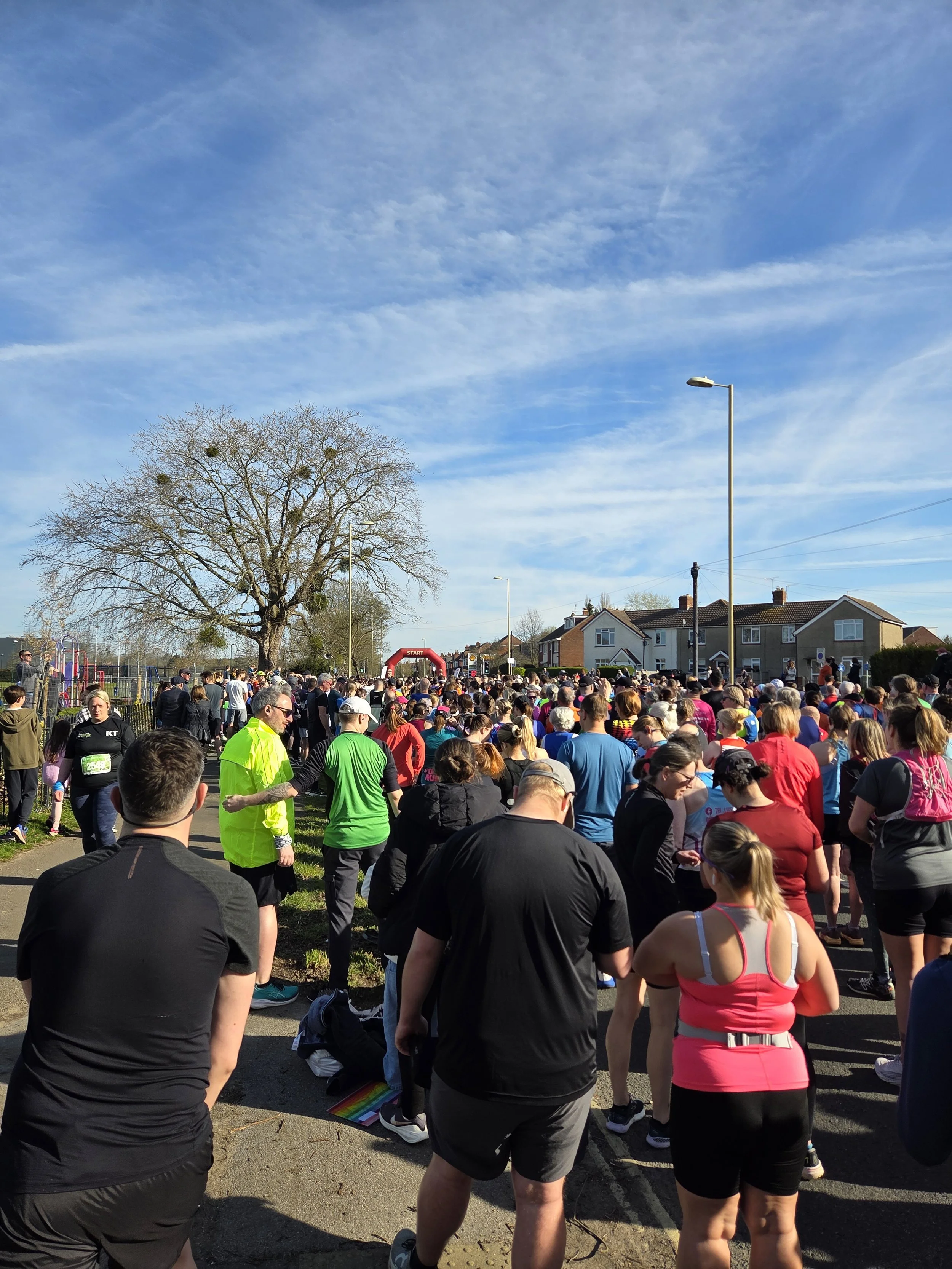
Picture of Michelle… somewhere… in the starting lineup!
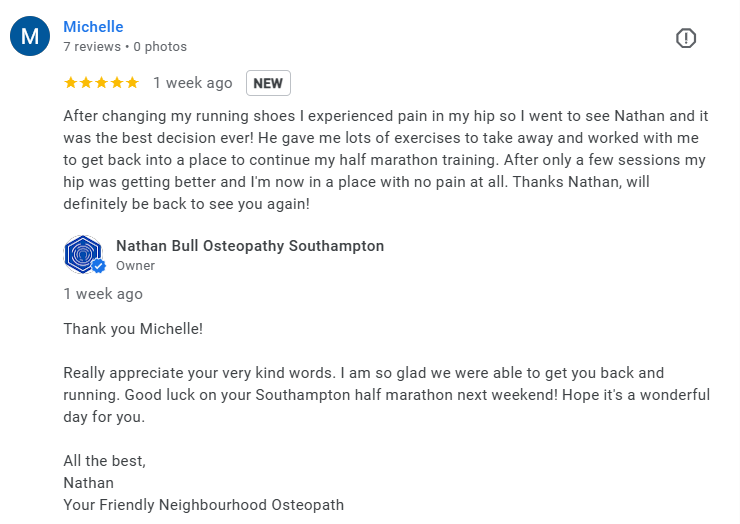
Here is what Michelle had to say herself in a Google Review
As for the gait analysis and stability shoes, I fear this was a classic example of trying to fix something that wasn’t broke. As I refer to in this newsletter from over a year ago.
So to all those reading this… be warned. If it is too good to be true… it probably is. Stick with what works for you and not what some self-proclaimed hidden-agenda** guru says!
**FYI the hidden agenda is to sell you shit you don’t need!
Thanks for reading.
Until next month…
Motion Forword ⏩⏩
Nathan